
About Us
🛫 Mission & Scope
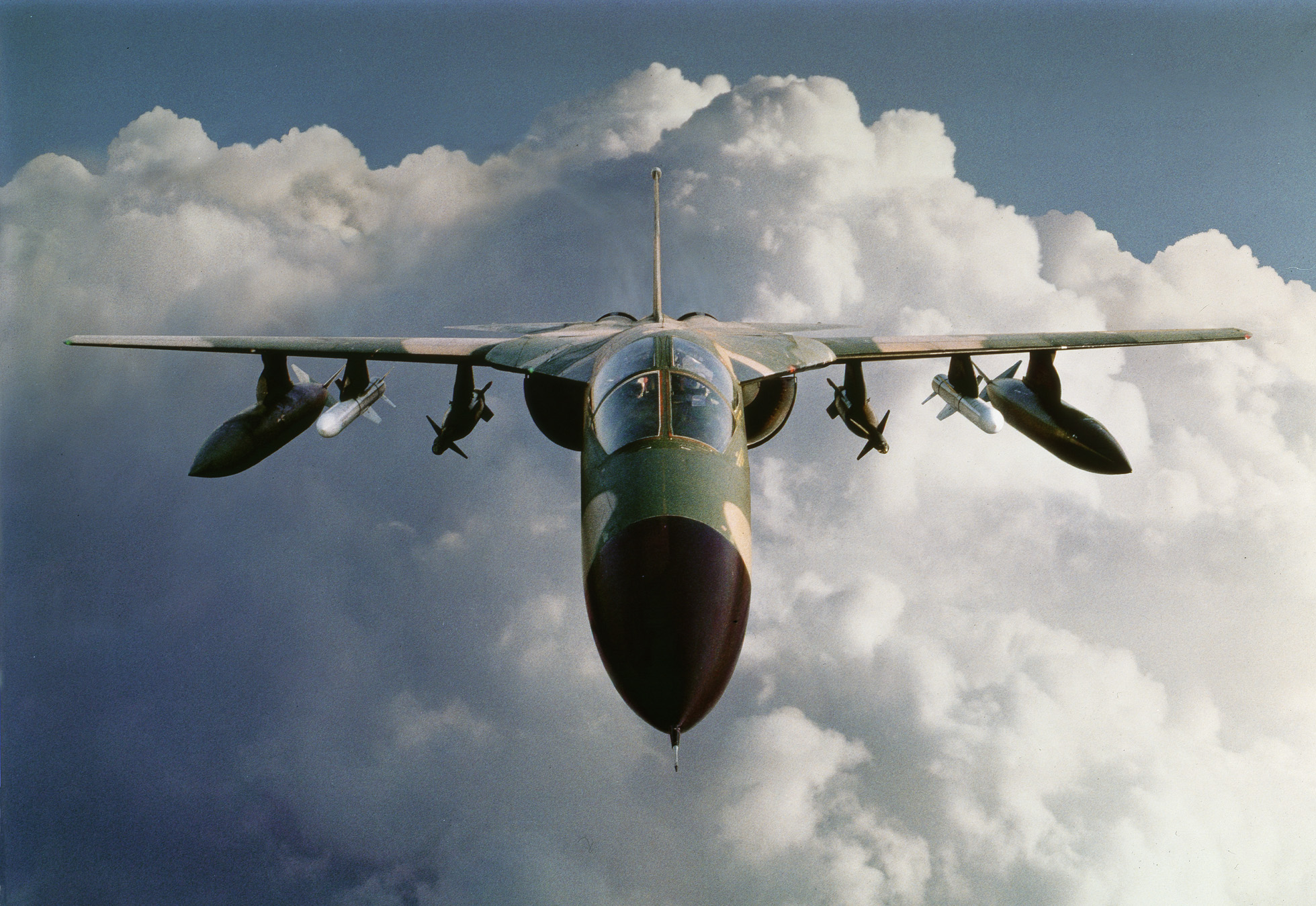
This archive represents a comprehensive digital preservation effort focused on the F-111 aircraft and its operational legacy. Spanning over 40 years of military aviation history, the collection consolidates technical data, mission records, and firsthand accounts—including rare original historical material from Cannon Air Force Base, through the intense operational build-up leading up to Combat Lancer (1968), Constant Guard V and Linebacker II (1972), Libya 1986 and selected coverage of the Gulf War (1990–1996).
📂 Deployment Records & Operational Detail
Among the most significant inclusions are files relating to Combat Lancer, Constant Guard V and Linebacker II, all transcribed and correlated with direct input from veterans who flew missions over Hanoi in December 1972. These records include full 1972 deployment details—dates, aircraft tail numbers, and operational details. Correlated with a level of precision not previously achieved, this portion of the archive sets the historical record in concrete, once and for all.
Squadron, wing, and command structures are well documented and included throughout the archive. These organizational details provide essential context for understanding deployment patterns, mission and command-level time line.
(Refer to the PDFs section for additional reference files).
🧠 Verification & Expert Input
The archive has been meticulously assembled and verified using original service records. Many files have also been reviewed by qualified contributors, including retired ranked officers, factory engineers, test pilots, and veterans—some of whom were part of the original General Dynamics design team. Their input has been instrumental in ensuring historical accuracy and technical fidelity.
📸 Visual Legacy
A large collection of Kodak slides—painstakingly scanned, digitally repaired, and enhanced—forms a visual backbone of the archive. This restoration effort has taken many years and reflects a commitment not only to technical fidelity but to preserving the emotional and historical texture of the era.
The author and friend Anthony Thornborough generously gave me his collection of Kodak slides and original research material used in all his published works on the F-111. These included rare files not available anywhere else, offering unique insights and documentation that elevate the archive’s historical value.
🌍 Preservation Efforts & Field Work
In the lead-up to the 2010 Final Farewell, I attended the last official media event at Amberley Air Force Base, held just weeks before the aircraft’s retirement. That moment marked the end of an era and reinforced the urgency of preserving the F-111’s legacy while key voices and records were still accessible.
For two years leading up to December 2010, I was personally instrumental in inviting a number of veterans, engineers, historians, and families to the RAAF F-111 Finale Farewell event—a moment that reinforced the collaborative and commemorative foundation of this project.
In a separate earlier preservation effort, I organized online a recovery crew—composed mostly of former F-111 crew chiefs—for F-111A 67-0051 recovery, which was successfully relocated to the Tyler Museum in Texas. Ron Rimbey & his wife Linda coordinated it all.
🌐 Contributor Network
Both civilian and military contributors—hundreds, if not thousands, from around the world—have provided material over the past 25 years. The sheer scale and quality of these contributions was daunting, and processing them into a coherent, accessible archive has taken many years. Publishing it here is not only a preservation effort—it’s a way of saying thank you to everyone who supported this journey, whether their contribution was big, small, or monumental.
I have many people to thank—both military and civilian. Their generosity, expertise, and trust have made this archive possible. This site stands as a collective achievement.
🗺️ Mishap Analysis & Geo-Referencing
Historical mishap details have been carefully transcribed, processed, and geo-referenced using Google Earth overlays, revealing patterns and insights not previously documented. These findings are presented across various files throughout the archive, adding a spatial layer to the historical record and enhancing both accessibility and analytical depth.
In the early 2000s, I received a complete mishap report on F-111A 66-0017—the infamous “tube of sealant” story—including images of the crash site, a personal account from the crash investigator who led the inquiry, and a direct email from the WSO involved in the incident. Receiving 1968 in-country mishap files—especially with this level of detail and provenance—was exceptionally rare at the time, and I consider it a privilege. These materials offer a firsthand perspective on one of the earliest operational losses and are preserved here with full respect for the individuals involved.
This incident, long referenced in technical circles but rarely documented in public archives, is now presented with full transparency. The files include maintenance records, annotated overlays, and personal testimony that clarify the root cause and aftermath of the event. It stands as a sobering reminder of the aircraft’s early vulnerabilities and the human cost of operational risk.
📑 Format & Accessibility
I make no claim to being qualified in any professional fields relating to the F‑111, such as avionics, weapons systems, or aircraft maintenance. My role has been that of a historian and archivist, with considerable experience in documenting the aircraft’s history. Through decades of research, restoration, and collaboration with those who served and engineered the F‑111, I have sought to preserve its legacy with accuracy, continuity, and respect for firsthand expertise. In the PDFs section, I’ve made sure not to overlook the dedicated modelling community—whose passion, precision, and attention to detail have long contributed to preserving the F-111’s legacy in both large & miniature form.
💻 Platform & Future Expansion
Due to the volume and complexity of the material, traditional print formats are insufficient. A digital platform allows for full accessibility, structured navigation, format options, and ongoing updates—ensuring the archive remains both authoritative and future-proof.
Every file carries its weight in terms of accurate historical documentation, carefully transcribed and correlated from original records spanning from the early 1960s through to the final farewell retirement in late 2010. A flat pricing model per file does not adequately reflect the scope or depth of work invested across all 628 pages. Some files contain only a single page, while others span many—each requiring varying levels of research, transcription, correlating, formatting, and verification.
If everything goes to plan, then I will consider adding the remaining files stored on my computer in stage two —ensuring the archive continues to grow and serve its purpose for generations to come.
It is also the best way to thank everyone who has contributed so much.
Your membership will directly help the establishment & future development of this online archive.